
Most guests arrive at Inspirit Ubud with a familiar list. They want to see the Tegalalang Rice Terraces, Tirta Empul, and the sunrise from Mount Batur. This list represents the standard Ubud Bali itinerary that travel guides have suggested for decades. These places are beautiful, and we certainly encourage you to visit them.
However, after years of welcoming travelers, we’ve noticed a pattern. The moments that stay with our guests long after they leave are never on those lists. These experiences are not bookable. They don’t have opening hours or entrance fees. Instead, they follow a spiritual calendar most visitors don’t even know exists. If you want a truly meaningful Ubud Bali itinerary, you must stay long enough to let the island reveal itself.
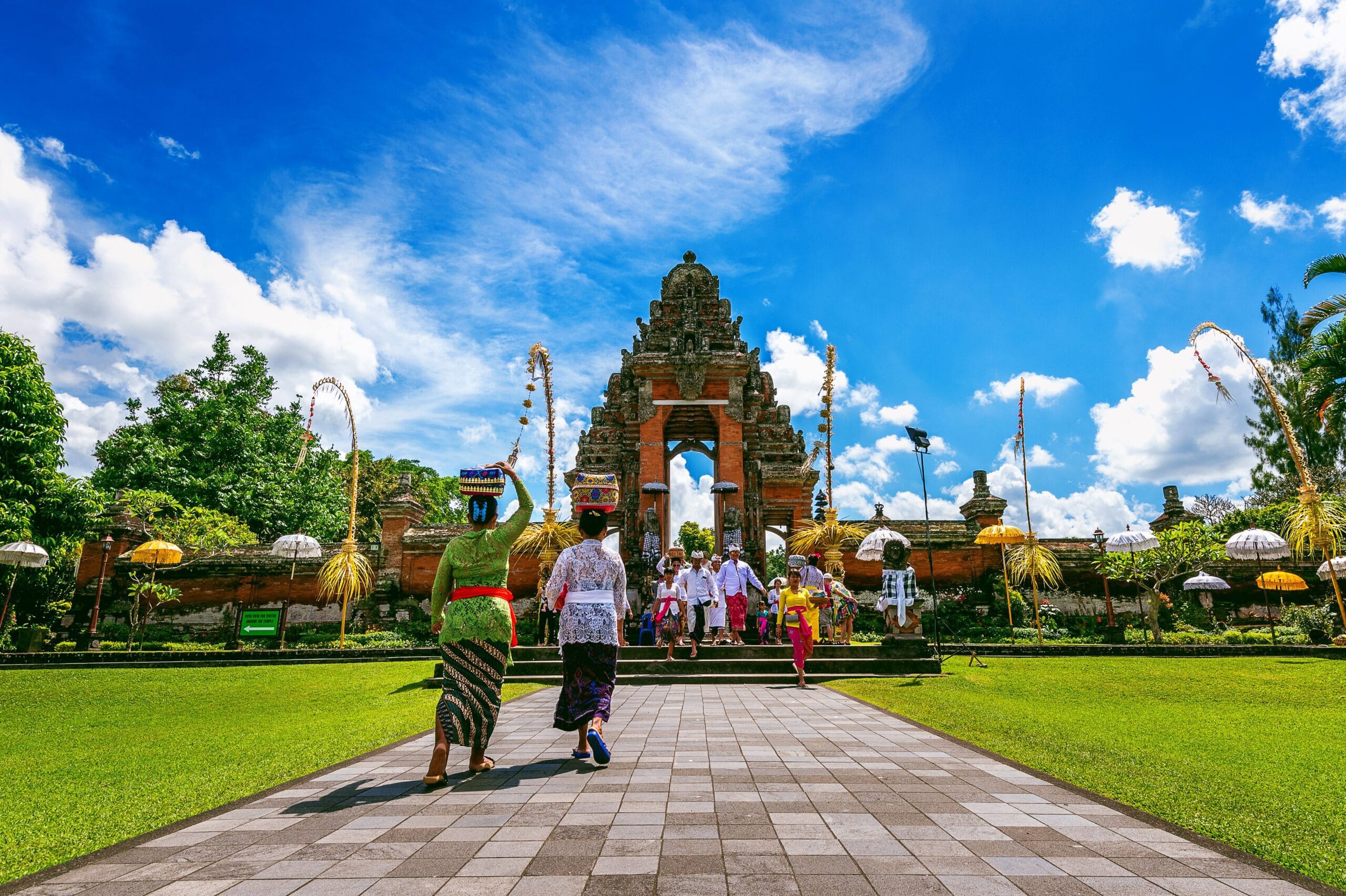
Bali hosts over 20,000 religious ceremonies every year. In the villages surrounding Singakerta, the spiritual density is even higher. Guests who spend a week or more here almost always stumble into a ceremony. Without fail, this becomes the most important story they tell when they get home.
Of all these traditions, Nyepi—the Day of Silence—leaves the deepest mark.
The Secret of Nyepi: Why Most Bali Itineraries Ignore It
Nyepi is the Balinese Hindu New Year. It follows the Saka calendar and usually falls in March. While people call it the “Day of Silence,” that name doesn’t fully capture the profound experience.
For 24 hours, the entire island of Bali presses pause. Every vehicle stays off the road. Every business closes. Residents keep all lights hidden. Even the Ngurah Rai International Airport closes completely. No planes arrive and no planes depart. This silence is real.
Traditional security officers, known as pecalang, patrol the streets in their black and white poleng cloth. This community-wide commitment is genuine. Balinese people choose this every year because the meaning runs deep. For 24 hours, Bali belongs entirely to itself.
Initially, our guests worry about being confined to their private villas. Yet, they quickly realize it is the most transformative day of their Ubud Bali itinerary.
The Night Before: Pengerupukan and the Ogoh-Ogoh
Nyepi does not arrive quietly. The evening before, known as Pengerupukan, is a visual masterpiece. It is available to anyone who walks to the main street at the right time.
Each village’s youth community spends weeks crafting enormous Ogoh-ogoh. These giant demonic effigies stand four or five meters tall. On Pengerupukan evening, teams of young men carry them through the streets on bamboo poles. Torches and spotlights illuminate the figures as gamelan orchestras provide a thundering soundtrack.
The figures seem to come alive in the moving light. Families, elders, and visitors all gather to watch. Many guests told us they had no idea this existed. They feel a deep gratitude for being in the right place at the right time. They find this authentic experience far superior to the commercial shows on the southern coast.
Pro Tip: Pengerupukan happens the night before Nyepi. You don’t need a ticket or a tour. Simply walk to Jalan Raya Ubud when the music starts. Our team can always point you in the right direction.
Finding Stillness Inside the Silence
Our villas sit in the rice fields of Singakerta. This means you experience Nyepi in its most complete form. No traffic passes our front gate. You only hear the sounds Bali makes without human interference.
Our guests often describe a consistent internal shift. For the first hour, they feel a restless urge to reach for a phone. This is normal. Most of us haven’t experienced total quiet in years. But then, something settles.
Individual birds become distinct. The wind moving through the rice paddies sounds like a slow wave. The jungle valley below our Nautilus Treehouse takes over the atmosphere. Balinese families spend this day reflecting and resting together. Our guests find themselves doing the same.
Understanding Tri Hita Karana
To understand Nyepi, you must understand the philosophy of Tri Hita Karana. This life philosophy shapes every Ubud Bali itinerary at a deep level. It describes three relationships that must stay in balance:
-
Parahyangan: Your relationship with the divine.
-
Palemahan: Your relationship with the natural world.
-
Pawongan: Your relationship with your community.
Nyepi honors all three. It gives the natural world a full 24 hours of rest from human activity. It allows the community to bond in silence and prayer. When guests understand this, Nyepi stops being an “inconvenience.” It becomes one of the most beautiful things they have ever witnessed.
Ceremonies on an Ordinary Tuesday
Nyepi is dramatic, but ceremony culture in Bali is a daily rhythm. An odalan (temple anniversary) happens somewhere nearby almost every day. When one occurs near our villa, the road fills with women in white kebaya carrying towering offerings.
Galungan and Kuningan are also major celebrations. During these times, curved bamboo poles called penjor line every road. Riding a scooter through these decorated streets is a highlight of any Ubud Bali itinerary.
These experiences are rarely available during a two-day stopover. You find them by staying a week or more in village areas like Singakerta. Here, the culture is immediate and real.
How to Be a Respectful Guest
Balinese people are incredibly welcoming. They often invite curious visitors to watch ceremonies more closely. To show respect, keep these tips in mind:
-
Wear a Sarong: Always wear a sarong and sash when entering a temple. We keep a selection at our wellness retreat for your use.
-
Observe Space: Do not walk in front of a procession. Step to the side and watch from a respectful distance.
-
Connect First: Make eye contact and smile before taking a photo. A simple nod is usually enough.
Why a Long Stay Changes Everything
After years in Ubud, we see a clear difference in our guests. A short-stay guest sees a beautiful place and ticks off a list. They leave with great photos and a positive impression.
However, the long-stay guest encounters the soul of the island. They wake up to a silence they’ve never known. They stumble into ancient rituals by accident. They leave knowing something about Bali that no travel guide can explain.
This is what happens when you stay in the right place long enough. We are confident it will happen to you, too.