
What It is Really Like to Sleep in a Jungle Treehouse in Ubud
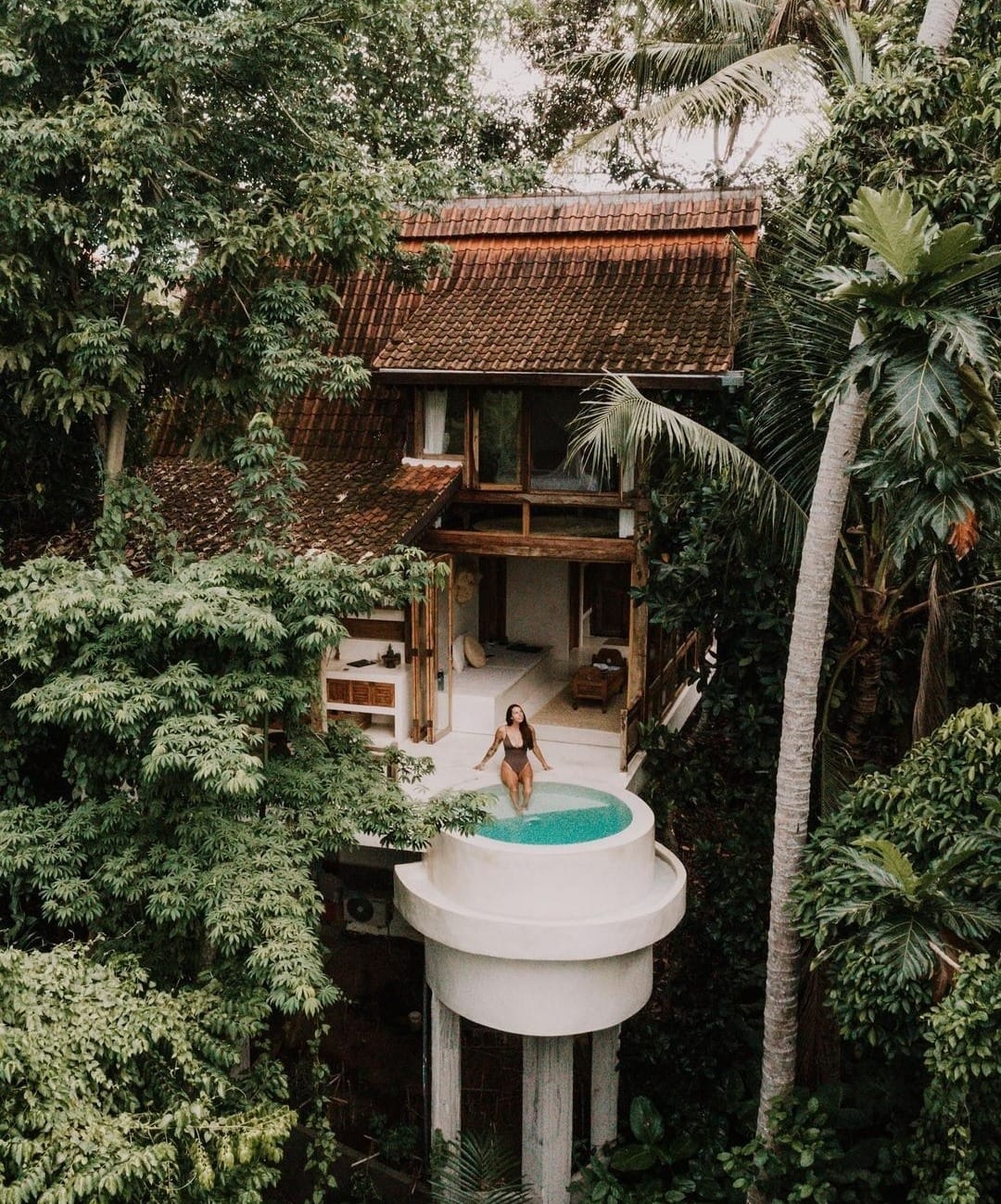
You have seen the photos. The pool hovering above a sea of green. The rope bridge disappearing into the jungle canopy. The open wooden walls letting the whole forest in.
But what is it actually like to sleep in a treehouse Ubud? To wake up surrounded by bamboo and birdsong rather than resort corridors? To have a private pool where the only view is rice paddies and jungle?
We asked ourselves the same question before building Cahaya Treehouse and Pelangi Treehouse at Inspirit Ubud. Here is the honest, sensory answer from arrival to the moment you reluctantly check out.
Experience the Rope Bridge Entrance
The road to a treehouse villa Ubud is not your typical hotel driveway. A narrow lane through rice fields leads you toward the property, and then you stop.
There is a rope bridge. Not a decorative one. A real, swaying, hand-crafted rope bridge that serves as the only entrance to Cahaya Treehouse. The first thing guests almost universally do is stop in the middle of it, look down into the jungle below, and feel something shift.
It is the moment the city brain switches off. The noise in your head goes quiet. You are not arriving at accommodation. You are arriving somewhere else entirely.
Guest tip: Cross the rope bridge slowly, especially at dusk when the fireflies start appearing in the bamboo below. It is one of those Bali moments you will carry with you long after you leave.
Staying at 100-Year-Old-Wood Treehouse
Step inside and the first thing you notice is not the view. It is the smell. Aged teak and Java timber. A faint warmth from the wood itself, even in the morning coolness of the Ubud hills.
Both Cahaya Treehouse and Pelangi Treehouse at Inspirit Ubud are built from reclaimed Joglo treehouse Ubud architecture. These are traditional Javanese homes over a century old, carefully dismantled and reimagined into contemporary treehouses by local Balinese craftsmen. Every beam, every panel, every joint was worked by hand.
The result does not feel like a building. It feels like the forest grew around furniture. Semi-open walls mean there is no clear boundary between inside and outside. The jungle is in the room with you, including the sounds, the air, and the shifting light.
What this means in practice: you will hear the jungle at night. Cicadas, frogs, and the occasional tokay gecko announcing himself from somewhere in the rafters. For some guests this is the thing they love most. For light sleepers, earplugs are recommended and mentioned in our house notes.
A Night at Treehouse
Nights in the Ubud hills are surprisingly cool, often dropping to around 20 degrees in the Singakerta area. The treehouses have air conditioning for the bedrooms, though most guests tell us they end up switching it off and sleeping with the balcony doors open instead.
The ceiling above the bed is exposed timber from the same 100-year-old Joglo wood that frames the whole structure. There is no television, which is intentional. The WiFi is fast for those who need it, but most guests report not touching their phones after dark.
What replaces the usual hotel soundtrack:
- The steady rhythm of tree frogs building after sunset
- Rain on the wooden roof during Ubud’s tropical showers, which is one of the most deeply satisfying sounds imaginable
- Roosters at dawn from a nearby farm. Bali is honest about this and it is part of the experience
- The distant sound of morning ceremonies drifting from the village
Morning: The Private Pool at Dawn
This is the moment every treehouse guest talks about.
Wake before 7am. It is worth setting an alarm, just once. Walk directly from bed to your private pool treehouse Ubud. At dawn the jungle below is still in shadow. Mist sits in the valley. The rice paddies catch the first light in long golden strips.
You are in warm water, completely alone, watching the day begin over one of the most beautiful landscapes on earth.
There are no poolside attendants and no other guests nearby. Instead of background music from a lobby, you hear only the sounds of nature. It is just you, the water, and the Ubud hills waking up.
The dawn pool is the number one thing guests mention in every review. Plan at least one morning specifically for this. It will become a core memory.
The Practical Reality
A jungle treehouse Bali experience is genuinely different from a hotel. Here is what honest guests wish they had known before arriving:
- The stairs to the upper bedroom are steep and have no railing. The treehouses are not suitable for guests with mobility limitations, young children, or anyone who is not physically comfortable with height.
- Insects are part of the deal. You are living inside a jungle. The housekeeping team manages this daily, but ants, mosquitoes at dusk, and the occasional gecko are neighbours, not problems.
- You will need a scooter or driver to reach restaurants and shops. The treehouses sit in the Ubud countryside, approximately 10 to 15 minutes from central Ubud. We arrange both, and this is part of the adventure rather than an inconvenience.
- Mobile signal is fine and WiFi is strong. You will not be cut off from the world unless you choose to be.
Who Is a Jungle Treehouse in Ubud Really For?
After years of hosting guests in Cahaya Treehouse and Pelangi Treehouse, we have noticed a pattern. The guests who love these treehouses most tend to share a few things:
- They have stayed in hotels before and want something they have never experienced
- They are travelling as a couple and value privacy and seclusion over hotel facilities
- They love nature and do not need constant entertainment
- They are happy to rent a scooter or hire a driver and explore independently
- They want Bali to feel like Bali and not like a sanitised international resort
The guests who would be better suited elsewhere: families with young children, those who prefer 24-hour hotel services on-site, or anyone who needs a central location within walking distance of restaurants.
Cahaya vs Pelangi: Which Treehouse is Right for You?
Both treehouses share the same Joglo architecture, private pool, and jungle setting. The differences are in layout and energy:
Cahaya (meaning Light): The Adventure Treehouse. Faces the jungle directly. Rope bridge entrance. More open-air feel. Perfect for guests who want the full immersive, wild Bali experience. Best for adventurous couples and nature lovers.
Pelangi (meaning Rainbow): The Romantic Treehouse. Faces the rice paddy views. More intimate energy. Pool overlooks the fields at golden hour. Designed for honeymoons, anniversaries, and couples wanting pure romance and seclusion.
How to Book
Cahaya Treehouse and Pelangi Treehouse are available for nightly rental through Inspirit Ubud. Both accommodate up to 4 guests across two bedrooms, with a private pool, kitchen, daily housekeeping, and breakfast included.
Additional experiences including floating breakfast, in-villa massage, floating flower bath, scooter hire, and private driver transfers can all be arranged at the time of booking or on arrival.
Ready to sleep in the jungle? Book Cahaya or Pelangi Treehouse at inspiritubud.com/our-villas/